• Skip to primary navigation
  • Skip to main content
  • Skip to primary sidebar

Hip and Knee News

News Resource About Hip, Knee and Orthopedic Surgery

  • Home
  • Hip Surgery
  • Knee Surgery
  • Resources
    • Hip and Knee Glossary
  • About/Contact

Blog

For Severe Arthritis Pain, Are Multiple Joint Replacements a Good Idea?

by

After several joint replacement surgeries, Lorry Graham jokingly calls herself a “bionic woman.” Friendly and optimistic, the 75-year-old Delaware resident always enjoyed an active lifestyle. And she always felt younger than her chronological age. Therefore, when arthritis caused by wear and tear began to cause an unpleasant weight on the knees and hips, she refused to take it sitting. Over the past six years, she has had four joint replacements at New York City’s Special Surgery Hospital (HSS), both her knees and her two hips, so she can enjoy life without pain.

“The pain was very, very limiting. It was affecting my quality of life and I didn’t want to live like that, ” she says. She decided to do something about it and researched a lot. “There were three main factors I considered before surgery,” she explains. “The first was the best hospital I could find, which was HSS. The second was the best surgeon I could find. And the third component was my mental attitude and my willingness to do the work after surgery to get the best result. ”

For each joint replacement surgery, Ms. Graham, a former high school teacher and advisor, made the trip from her home in Delaware to HSS in New York City. “I always knew I had to do it. I love walking, I love shopping, I love playing with my grandchildren, ” she explains. “And arthritis made me limp, it hurt, it affected my sleep. This type of pain is shown on the face. You are not a happy person. I didn’t want to delay the surgery any longer than I had to. ”

Her doctor, Geoffrey Westrich, MD, who specializes in knee and hip replacements in HSS, says it’s not uncommon for patients to have advanced arthritis in two joints. Having four joint substitutions is less common, but it does happen. He recommends that patients considering various joint replacement surgeries do their research to find a high-volume joint replacement center and an experienced orthopedic surgeon who takes the time to answer all their questions and who they are comfortable with. .

“When someone has more than one joint replacement, timing and recovery are important and no two patients are alike,” says Dr. Westrich. “If someone has painful arthritis in both knees, for example, and conservative treatments like physiotherapy and over-the-counter medications offer no relief, we usually wait about three months between surgeries. It’s the time it takes the body to heal. and the time it takes to do physical therapy and make the muscles strong again. Patients will support their weight with the side that underwent the first surgery. ”

Dr. Westrich adds that a critical factor is the surgeon’s experience in knowing when it is safe to proceed with the next joint replacement. That’s why, after the first postoperative visits, Dr. Westrich sees the patients again after six weeks to make sure they are doing well, and sometimes after three months, before proceeding with a second joint replacement.

These days, on the same day, double replacements of the joints are performed less frequently, as Dr. Westrich and other HSS researchers have found that it is best for most patients to have “in-phase” procedures, that is, to have the surgeries performed at least months apart. “In studies, we have found that bilateral knee replacement surgery on the same day can present more challenges for the patient from a medical point of view, more pain medications are needed after surgery and physiotherapy is much more difficult because they don’t have a good standing leg, so to speak, ”he says.

Dr. Westrich points out that sometimes there is a good reason to perform a bilateral joint replacement on the same day. For example, both arthritic knees may have a severe flexion contracture, meaning they are in a bent position and the patient cannot straighten them. “In these cases, it may be appropriate to do a double joint replacement, as physiotherapy can be much more difficult if the unoperated knee is bent.” He adds that if the contracture is not too severe, a shoe lift can equalize the length of the legs and allow the patient to do physical therapy after two different procedures.

Mrs. Graham had four different surgeries and, less than two months after her final hip replacement in May, said she was feeling very well. “I am shaking this, I am totally shaking it. I went to play mahjong with my friends and when I came in, they couldn’t believe how good I looked and how good I was doing.”

She believes her mental attitude and willingness to work hard in rehabilitation after surgery played an important role in optimizing the outcome of each joint replacement. Dr. Westrich agrees that going in with a positive attitude and dedicating yourself to work can improve outcomes.

“Clearly, Lorry Graham was very interested in his recovery and worked very hard after the surgery to get a good result,” he notes. “There is no doubt that patients who work hard and spend a lot of time on physiotherapy tend to progress faster and have a better overall recovery.”

Just two months after her last hip replacement, Mrs. Graham visited a new New York City park with her friend and walked for more than an hour without pain. “I walk everywhere,” she says. “I am doing better than in the last six years. It feels great. ”

Filed Under: HIP, KNEE, ORTHO NEWS

Is It Wise to Do Pilates Before or After Hip Replacement Surgery?

by

[ad_1]

If you are scheduled to have hip surgery, now is the perfect time to start doing Pilates. Even if it seems counterintuitive to start this joint, doing so with the guidance of a skilled and experienced Pilates instructor will strengthen the joint muscles safely. This is just one of the many benefits of participating in Pilates before hip surgery.Pilates before surgery will also help strengthen the tissue surrounding the hip joint and maintain its range of motion. The exercises are gentle and have little or no impact, which means they can be performed even when there is femoral deterioration in the hip. In addition, Pilates helps to break down the compensation habits you may have formed. These are movements or adjustments that you have developed in your body while trying to avoid pain in your hip joint.

“They’re normal,” says Ron Jegadeesh, a Pilates instructor, physiotherapist and owner of Southfield’s Pilates Fitness & Physical Therapy Center, “but they also throw the body out of alignment and further exacerbate their condition.”

Another consideration is the fact that some atrophy will occur after surgery, during the postoperative rest period. By strengthening the hip area before surgery, you will begin the process from a stronger place than if you had not performed any Pilates. In addition, you will also improve your balance by strengthening the core, which will help you after surgery. Maintaining balance will be important once you start rehabilitating this joint; you will be less likely to fall and feel more confident about re-exercising as needed. This is where Pilates comes into play after surgery.

Once you start rehabilitating the hip joint, logic would rule that you will only work the affected side, but there is an imbalance between the two sides of the body that has been exacerbated by the aforementioned compensatory habits you probably developed before surgery. In addition, when it is reached, although there is a clear imbalance around the hip joint and the incision point, the whole body experiences the consequences of the surgery. For example, the brain has to recover from the effects of anesthesia and the body’s immune system is weakened. All of these factors make Pilates a unique qualification for rehabilitation after hip surgery.

Pilates largely avoids high impact, high power output, and heavy muscular and skeletal loading. With the Pilates system, individual units work together in an organized scheme or method. In other words, while working to strengthen the area around the hip joint and increase its range of motion, the rest of the body is oriented as an integrated system.

This is done with an emphasis on core strength and two-way stretching. During hip surgery rehabilitation, you will learn to use the core muscles to support every movement of your body. Under the attention of the instructor, you will perform these exercises with proper alignment to make sure that the muscles establish new fibers in the most beneficial way for the joint. Pilates largely avoids high impact, high power output, and heavy muscular and skeletal loading.

The amount of time you need to recover before participating in Pilates after surgery will depend on many factors. For some patients, particularly those involved in preoperative Pilates, it could take as little as six weeks after surgery. For others, it can take two to three months. Obviously, you first want to get permission from your surgeon.

If available, look for a center that offers both Pilates and physical therapy. Physiotherapists in these settings are also trained in Pilates and use Pilates equipment and machines to further facilitate the recovery of their patients. After the initial physical therapy sessions, patients can be effectively transferred to Pilates with the guidance of their physiotherapist. If this place does not exist near the place where you live, be sure to work only with highly trained Pilates instructors who are able to approach your mobility safely, both before and after surgery.

Filed Under: HIP, hip surgery

No Knee Replacement Necessary? Perhaps, with High-Tech Knee Brace

by

[ad_1]

A California robotics company is about to launch a high-tech knee brace that can alleviate the suffering of millions of Americans facing knee osteoarthritis. It can be especially appealing to patients who want to avoid knee replacement surgery.

San Francisco-based Roam Robotics said its $ 7,000 Ascend orthosis should begin shipping this winter. Certified by the FDA as a Class 1 medical device, Roam provides for reimbursement for both Medicare and private insurance. Medicare could cover 50% or more, and private insurance could cover the entire cost in some cases, Roam says.

Roam Robotics CEO Tim Swift

Roam is located in San Francisco’s Mission district, across the street from Oltrelab, an engineering company that has awarded tens of millions of dollars in government research contracts, primarily for robotics and energy projects. Roam is one of several emerging companies emerging from Altrelab. Its founder and CEO Tim Swift is a veteran of Ekso Bionics, a pioneer in the field of the exoskeleton. After working on heavy, super-expensive exoskeletons, Swift concluded that a radical move away from conventional designs was needed if exoskeleton technology became accessible and affordable.

“Our goal is not to build cyborgs. It’s to make people more human than they ever were.”

– CEO Tim Swift

“I think we have the ability to change the relationship that people have with robots on a scale that has never been considered before,” Swift says. “I don’t want people to see robots as something beyond human beings. Our goal is not to build cyborgs. It’s about making people more humane than they ever were. ”

Ascend is made of lightweight carbon fiber and high-strength fabric. The pneumatically powered device is connected to a rechargeable battery that is carried in the backpack. Custom knee arm sensors provide real-time data to Ascend microprocessors, where proprietary algorithms detect the user’s intent and then extend and flex the knee. Ideally, this relieves pain and increases patients ’ability to navigate stairs and master simple daily activities.

Rowan Paul, a sports medicine doctor who has consulted with Ascend, says he may like those who are reluctant to use a cane because of the stigma of disability it entails. Knee strengthening makes them look like an athlete with an injury, he says. Ascend can also reduce or eliminate the need for opioid pain medications or cortisone injections, which offer temporary relief from osteoarthritis, but are at risk for side effects.

“I’ve seen several patients, where if we can just give them a little help in a very specific and precise way, they don’t need to do a knee replacement,” Paul says.

Roam market research places the number of patients living with severe pain and limited mobility due to knee osteoarthritis at 10 million or more.

The company has opened a storefront in San Francisco where patients can try Ascend driving. Reid Weaver came down from Tacoma, Washington, in June to try one and it was sold with the product. “It’s so comfortable and so light, that you don’t even feel like it’s there,” says Weaver, who spent 19 years as a SWAT police officer in Washington state and now works as a court officer protecting the judges of Tacoma.

The weaver had surgery on his legs after a hiking accident, but surgery exacerbated his osteoarthritis. Weaver, 60, is an avid outdoor enthusiast who played football in college and manages to ride a motorcycle to work. With the Ascend knee put on, Weaver finds that he can go up and down the stairs with ease and was surprised that it was no longer a struggle to get up from a chair, a challenge for many with osteoarthritis in the knees.

“That was a lot more powerful than I thought it would be,” Weaver says. “It basically got me out of the sitting position without using my hands, without moving forward. I think it will change the game.

Angelique Newman-Malone, 52, of San Jose, California, says she felt trapped in her own body from osteoarthritis. After coming across an Ascend ad on Facebook, Newman-Malone wore his knee on several occasions and declared it a gift from God.

“I felt like someone was supporting me, like a partner walking beside me,” he says. “That feeling is amazing.”

But the best advantage for Newman-Malone is that the knee strap allows him to kneel and then stand up. A devoutly religious Christian, she said the ability to kneel when praying is key.

Filed Under: KNEE, ORTHO NEWS

Benefits of Robotic Hip Surgery Using MAKO

by

[ad_1]

Operating room robots aren’t just things from science fiction movies. In fact, many orthopedic surgeons already use them to increase their accuracy and precision. Total hip replacements are now being performed with the help of Mako, a robotic arm, and a three-dimensional modeling software system. Dr. David Cheong at Orthopedic Associates in West Florida, located in Clearwater, is one of the few surgeons in the state who uses MAKO to replace hip instead of just knee. Explain its benefits.

What is a macoplasty?

“Mako is the name of the robot used in makoplasty procedures. It’s basically robot-assisted arthroplasty or joint replacement surgery,” says Cheong. “Makoplastys begins with a computed tomography of the hip, which is then used to plan the placement of the implant. Not only planning, but execution can be done with significant accuracy because of this technology.” .

The procedure takes a few hours in an outpatient center. It starts with computed tomography (or CT), which becomes a 3D model of your natural anatomy, thanks to Mako software. The robotic arm is then directed by the surgeon to help place the hip implant at the correct point. Cheong says the Mako gives him auditory, visual, and tactile cues to help guide him in the right direction. Once completed, patients can leave the operation on the same day, without the need for hospitalization.

How long is the recovery time?

“Recovery lasts two to six weeks, which is also typical of traditional hip replacements,” says Cheong. “The only difference is the way the procedure is performed.”

In a matter of weeks, patients usually return to normal daily activities, but physical therapy is required to regain strength and make sure the implant is working properly. From here, follow-up appointments with the surgeon will be required. Implants can last from 10 to 25 years, depending on weight, activity level and general health.

How much does a macoplasty cost? Medicare and private insurers will cover the cost of a macoplasty because it is still considered a joint replacement surgery. Out-of-pocket costs will be the same as for traditional surgeries: $ 17,000 to $ 20,000. The cost of the robotic arm is expensive for doctors ’offices, so many hospitals don’t have it, just orthopedic practices.

Why don’t more surgeons use Mako’s robotic arms?

“A lot of doctors use this machine just for knee replacement, but the technology is a constantly evolving process. I think we’re going to start seeing more doctors implementing it,” Cheong says. “As surgeons, we are creatures of habit and it all depends on the type of doctor and the style they prefer, traditional or technological.” Cheong has been using the Mako arm for five years and believes it helps him place implants more accurately while eliminating other variables.

Who is a good candidate for a Makoplasty? According to Beaumont Health, makoplasties are for anyone suffering from non-inflammatory or inflammatory degenerative joint disease. Forms of degenerative joint disease include osteoarthritis, post-traumatic arthritis, rheumatoid arthritis, avascular necrosis, and hip dysplasia. Cheong adds that patients who prefer not to receive surgery may apply cortisone injections or anti-inflammatory medications as alternative treatments.

“Ultimately, it’s up to the patient to decide what they’d like to do,” Cheong says. “But for many, this type of surgery greatly improves their quality of life.”

Filed Under: HIP, hip surgery

98-year-old Woman Walking Smoothly One Day After Knee Replacement

by

[ad_1]

A 98-year-old woman with severe osteoarthritis of the knee has recently undergone total knee replacement surgery. She was discharged 24 hours after the surgery which was performed using the minimally invasive surgery (MIS) technique at Manipal Hospital.

Dr. Rohan Desai, a hip and knee replacement surgeon, said the patient had seen them a couple of years ago with left knee problems. The need for surgery was not felt then. “About a couple of weeks ago he visited us and, after the examination, it was found that his knee was very deformed. He could not stop or walk and was confined to a wheelchair,” Desai said.

After doing the necessary tests and medical advice, it was decided to do the knee replacement surgery. He suffered from comorbidities such as hypertension, heart problems: pacemakers for 15 years, nephropathy and anemia. Diseases were controlled long before and after surgery. “Medical management of comorbidities is very important for successful surgery. We did it with the MIS technique and, in a few hours, he was able to stop and walk to everyone’s surprise. This is the first time that a 98-year-old boy with comorbidities has undergone such surgery in Goa,” he said.

Manish Trivedi, director of the hospital, said people do not usually undergo these procedures once they reach a certain age, for example, after 60 or 70 years. “It is never too late to undergo any type of medical procedure, after consulting a doctor. The patient in question was able to stand up and walk smoothly only one day after the surgery, ”said Trivedi.

“Rapid mobilization was possible in a few hours, thanks to multimodal analgesia and advances in anesthesia techniques, which we use,” he said.

Filed Under: KNEE, ORTHO NEWS

Robotic Arm Installs 3D-Printed Joint Replacements

by

[ad_1]

Monogram Orthopedics takes a unique approach to joint replacement. The company’s robotic arm installs joint implants that have been 3D-printed to fit each patient’s specific bone structure with gloved hand precision. The company claims that its system will allow surgeons to replace joints with perfectly fitted implants and through less invasive procedures, reducing the rates of infection, dislocation and failure of the implant and dramatically improving patient outcomes.

With $ 16.7 million in capital and its growing list of pre-orders, Monogram expects to make a profit by the end of 2021. Here we will delve into Monogram technology to see how this company is poised to transform the world’s joint replacement market. . .

Generic implants have a high cost for patients

Traditional hip and knee replacements can be inefficient, error-prone, and prone to failure. Even today’s most advanced implants are mass-produced. These implants are installed after surgeons measure the proportions of a joint and then cut the affected bone with saws and insoles. Once they have given way to the implant, surgeons stick it in place with bone cement, which can crack after surgery. In fact, the implants themselves may also be prone to mechanical failure, forcing thousands of patients to return to hospitals for new operations.

These problems are well known to the medical community. Although many implant failures occur due to mechanical problems, many remain related to the underlying problems of instability, misalignment, and cement rupture.

All of these problems can be mitigated with technologies such as mapping and 3D printing, which have helped solve similar problems in other medical fields, and today physicians and patients are increasingly looking for more customized and accurate implant solutions. This is where Monogram technology comes in.

Custom implants provide better results for the patient

Unlike the generic products of their competitors, Monogram custom printed implants use each patient’s individual bone structure as a plan. The company’s custom manufacturing process begins with a computed tomography of the board to be replaced. The data from this scan feeds an AI-based preoperative interface, which uses predictive algorithms to help the surgeon plan the procedure from all angles. An automated manufacturing system prints the implant in 3D, giving it a way to slide perfectly into the patient’s joint.

A robotic surgical arm serves as the second component of the Monogram system. Guided from a real-time virtual navigation dashboard, the robot follows the surgeon’s instructions, but does not require any direct manual guidance, effectively eliminating human error from the surgery itself. The arm begins by making a small incision and then uses a milling drill to clean a precisely sculpted cavity in the bone. The implant adapts perfectly to the cavity with minimal or no cement, which has Monogram up to 270% more stable than a generic equivalent.

Taken together, Monogram’s hardware and software represent innovations expected by the orthopedic industry. Given the failure rate of traditional implants, it’s not hard to see why. The adoption of Monogram technology could significantly reduce cases of loosening and dislocation, which would result in far fewer repeated surgeries and significantly improve patient outcomes.

Robots and 3D printing are on their way to rapid expansion

Because low-wear plastics make knee implants more practical for under-65s, young and active patients are expected to account for more than half of all knee replacement procedures by 2030, creating a total market of at least $ 12.5 billion.

Companies that reach the market first in this sector gain a considerable advantage over their competitors. For example, today’s leading orthopedic robot outperforms its second rival 12 to one, with a market share of 87%. Kamran Shamaei, Monogram’s vice president of engineering, helped develop this robot, and right now Monogram is the only company that sells an active milling robot arm that installs custom printed implants.

In short, Monogram has a leading market advantage in a sector that is about to become even more competitive. It is entering this market through a multi-purpose approach designed to mitigate risks and at the same time bring about the maximum possible traction of its existing capital.

Over the next few months, Monogram plans to generate immediate term revenue by licensing its global knee implant system to networks of medical distributors. He will then leverage these networks to sell patient-specific 3D printed implants, initially for use in traditional manual surgeries. Finally, it will present its surgical robot, completing the launch of its entire integrated solution.

Monogram has already raised $ 16.7 million from more than 6,700 investors and raised them through three successful rounds of financing. Now, with two signed dealer contracts and more under construction, Monogram offers individual investors the option to buy shares normally restricted to venture capital firms and banking institutions. It has already sold $ 7.3 million of these shares, surpassing yet another funding target.

It is clear that the future of medicine is personalized. Tailor-made implants and robotic surgeries will be the norm by the end of this decade. By then, Monogram could be the leader in this rapidly changing space, allowing surgeons to deliver the consistent results their patients deserve.


The content of this article should not be construed as a substitute for professional medical advice, diagnosis, or treatment. Always consult a doctor before trying any treatment or buying products to help you control your condition.

The content of this article also does not constitute any financial or investment advice. It is important to conduct your own research and consider seeking advice from an independent financial professional before making banking or investment decisions.

Filed Under: ORTHO NEWS

Hip Surgery Alone Doesn’t Improve Activity

by

This is something that needs to be taken away from a new study that shows that getting a total hip replacement does not lead to greater physical activity.

It’s a remarkable finding, given the ubiquitous beliefs we usually have about hip replacement: joint pain is all there is among our seniors and the dust that builds up on their ellipticals. If a new femur cap is given, our feet will no longer fall apart, continue to exercise, and free will fall like empty bottles of soaking salts.

Instead, it turns out that when it comes to getting a new ball and plug into the space behind the front pocket, increasing exercise is the exception, not the rule.

The study, conducted by a team of Australian researchers and published in The Journal of Bone and Joint Surgery, examined activity patterns and other function markers for 51 patients with hip replacement, 66 years on average, at one point before and after getting a new hip.

The project was not limited to reviewing in one week. The authors waited patiently, conducting activity assessments a year after the surgeries and then a year later, taking advantage of ways to tell the truth about activity trackers worn on the wrist.

Data from these bands were added to the researchers ’other assessments, readings, and questionnaires that told a history of patients who reported less pain, increased quality of life, and improved biomechanics on foot, speed, and step.

But, unfortunately, not a minute less was spent on the stationary setup. On average.

In contrast, the authors found that patients were sedentary for nineteen and a half hours a day before surgeries and also after surgeries. Again, on average.

Which is a great detail, says Dr. Michael Taunton, an orthopedic surgeon at the Mayo Clinic.

“So there are some patients, because they’re getting older and their activity is declining,” he said. “You also have the small number of very young arthroplasty patients who really drastically increase their activity. The study isn’t wrong, but it doesn’t tell the whole story.”

These new hips will not lead you to the gym

“I think that’s something we see constantly,” said Taunton, who has no connection to the studio. “That patients before and after arthroplasty are generally no longer active.

“If someone hasn’t been very active for ten years because their hip hurt, no, they won’t be back where they were ten years ago.”

If you measure the number of steps someone takes a day before and after arthroplasty, Taunton says, “it doesn’t really change much. I think there are a lot of things involved.”

For starters, according to Taunton, the population undergoing hip replacement is often in a period of life in which it slows down, regardless of the limitations caused by joint pain.

“Somewhere around age 70 you start to physically decline,” he says. “It can’t be avoided … I hear a lot of patients say‘ if I could replace my hip, I could be much more active ’, it’s in the same line as‘ if I could replace my hip or knee, I could lose weight.

“We’ve found … that patients don’t lose weight after having their hip or knee replaced, in general. Some patients do. But we’re talking about stockings here. If someone doesn’t lead a very active lifestyle preoperatively they probably they will not change and become extraordinarily active people. ”

On the other hand, there is good news for those who are extraordinarily active, because artificial hips can, as it turns out, suffer a severe beating.

Taunton offers a previous tissue-saving procedure that avoids cutting muscles and, for qualifying patients, abandon the procedure with a hip that has no asterisk.

“I’ll see them again in three months and say,‘ right now you have no restrictions, ’” he says. “” I say, “You should let the pain be your guide, but the more active and strong you are, the better you will feel.”

“I try to emphasize to them that they have no restrictions in relation to the joints. Their restrictions will be based on their body.”

Taunton says he has artificial hip receivers who play professional-level sports and all down.

“I have people from the elderly who do water skiing, alpine skiing, hiking, tennis and pickling,” he says. “The sky is the limit. The limits are much more about the patient’s overall fitness, not about joint replacement.”

But you need to get out of your preoperative routine.

“Sometimes people want to go out and walk every day will make them strong,” he says, “and that’s not the case. You need to do more varied activities and focused focused exercises to get that benefit.”

For their part, the Australian authors advised health systems to provide a more multifaceted model of care after hip replacement procedures, a hip surgery that ultimately also identifies barriers to activity after hip surgery.

Filed Under: HIP

Tips to Help Adults Prevent Hip Surgery or Arthroscopic Hip Replacement

by

[ad_1]

Tips for Chiropractors and Care Providers to Avoid Arthroscopic Hip Surgery or Hip Replacement

In the United States, 3-7% of older adults will have some type of hip osteoarthritis during his lifetime. “Osteoarthritis” or “OA” is the appropriate term for overuse or age-related degenerative conditions. While there are other types of hip problems, such as fractures or soft tissue injuries, most people will be diagnosed and seek care for the degenerative type, eventually trying to avoid arthroscopic hip surgery.

Hip replacements and alternative methods

These degenerative hip problems result in nearly 200,000 hip replacements each year in our country. These surgeries are not only expensive, but involve intensive and time-consuming rehabilitation, as well as the potential for various post-surgical problems.

While some people may actually need arthroscopic hip surgery, many others are borderline surgical candidates or are not prepared to go under the knife without first exhausting other treatment options. In these cases, a combination of proper exercise and chiropractic care can significantly delay the need for surgery or even help prevent it altogether.

Exercise to support the muscles

Exercise and physical activity are known to have a positive effect on joint health and condition. When we look at the hip, we find a large “ball and socket” joint between the femur and pelvis that supports much of our weight when we do any “vertical” activity such as walking, running, or stopping.

Surrounding this joint and providing dynamic support is a complex arrangement of muscles, including the glutes, hip flexors, quads, hamstrings and adductors, to name just a few. Weakness in these muscle groups can cause unwanted additional load on the hips and cause excessive wear. By exercising regularly, especially in resistance exercise, we can make sure that the support muscles around the hip are strong and have the ability to support the hip during our daily activities.

Another added benefit of physical activity is that exercise can stimulate chondrocyte activity in the joints. Chondrocytes are the small cellular structures that hold and produce cushion-like connective tissue that surrounds and coats most of the joints in our body. If we can stimulate chondrocyte activity, we can aid in the physical process of repairing damaged tissue and creating new healthy tissue.

The good news is that if you don’t feel comfortable in a gym setting or your degeneration is too advanced to participate in “traditional” weight lifting, even the simplest bodyweight exercises can be extremely effective. Movements such as aerial positions, lunges, hip pushes / bridges, etc., are safe and efficient methods to improve endurance and muscle strength. If patients have the strength and ability to perform even more demanding exercises, encourage them to do so.

Strength exercises vs. cardio

If endurance exercise is good, what about cardio? Do you like walking or running? The answer is a bit complex.

Many studies show that, in the context of hip health, it is possible to overdo certain types of cardiovascular activity. A 2015 study, which measured the amount of load our hips experience when moving, showed that when walking, an average adult will experience hip contact forces approximately 4 to 5.5 times their body weight. This load can increase our body weight by up to 10 times when running 12 km / h (approximately the rate of one mile in 8 minutes).

For example, a 180-pound individual will experience hip contact forces of nearly 1,000 pounds when walking and more than 1,800 pounds when running. Does this mean that cardiovascular exercise is necessarily bad for the hip? No, but we must understand that these forces of contact with the hips create a cumulative effect over time. Several studies show a positive relationship between a runner’s age, running pace, total mileage, and degenerative hip disease, probably due to the increased hip contact forces that occur during the race. .

What does this mean for patients? While we can’t make specific recommendations for cardiovascular exercise, we know that extremely high mileage combined with a fast running pace can lead to an increased risk of degenerative hip problems, and the more degeneration there is, the more likely you are to encounter problems. . In the context of hip health, this means that a regular walking routine can greatly benefit patients, while running should be carefully monitored.

If you want to practice more vigorous cardiovascular exercise, try something like swimming or an elliptical shape that removes some of the load from the joints.

When adding exercise to a “surgical prevention routine,” the chiropractor or physiotherapist should determine what types of movements and loads are appropriate and make sure patients follow a proper and safe manner. When used correctly, exercise can play a valuable role in delaying the need for hip arthroscopic surgery or other surgery.

Research and the role of the chiropractor

Numerous studies have focused on the relationship between chiropractic / manual therapy and degenerative hip disease, but one highlights the benefits very well.

A 2004 study compared “manual therapy” with “exercise therapy” in 109 individuals who had previously been diagnosed with hip osteoarthritis. The exercise group focused on active exercises to improve muscle function and joint movement. Manual treatments (also known as chiropractic care) include: identification and stretching of short / tense muscles within the hip complex, traction of the hip joint, and manipulation of the joint in “each appropriate limited position.”

Participants were divided into two groups and treated for a period of five weeks, and the results were very impressive:

  • Success rates of primary outcomes were 81% for manual therapy, compared with only 50% for exercise therapy;
  • The manual therapy group had significantly better outcomes to improve range of motion, hip function, stiffness, and pain;
  • The positive results experienced by the manual therapy group lasted after 29 weeks.

In addition to manipulating the hip joint, another consideration should be the difference in leg length (LLD), a sign of biomechanical problems with the pelvis, SI joints, and / or lumbar spine. Interestingly, research shows a potentially strong relationship between LLD and the onset of degenerative hip disorders, probably because weight alteration in a joint could be a contributing factor to osteoarthritis. Although there are other methods for analyzing pelvic / lower back function and alignment, research focuses on LLD because it is easily quantifiable and reliable.

LLD and stressful

The researchers propose that pelvic tilt or torsion, visible through the measured difference in leg length, puts uneven load and tension on the hips and can reduce the area of ​​contact of cartilage in the joint.

The combination of these tensions can increase the pressure on the cartilage and bone of the joint, causing degenerative hip conditions. We see evidence of this in a survey of 100 patients who were diagnosed with hip osteoarthritis. The researchers measured each person’s LLD just before hip surgery and found that their hip osteoarthritis was next to the longest limb 84% of the time. Other studies have shown very similar findings regarding knee osteoarthritis.

For chiropractors treating patients with degenerative hip problems, the focus is on restoring normal movement of the joints to the hips, as well as eliminating or reducing the amount of measured difference in leg length. Regardless of what methods or techniques are used to achieve this, attending to these areas can significantly reduce the need for surgery and have a positive impact on patients ’overall function and pain levels.

Arthroscopic hip surgery and variable options

While some patients really need surgery or arthroscopic hip replacement to protect their quality of life, many others have options when it comes to degenerative hip problems.

Proper exercise scheduling, combined with specific chiropractic care, can dramatically improve an individual’s function and mobility, significantly reduce their pain levels, and delay or avoid the need for surgery.


Filed Under: HIP, hip surgery

“Mess” in Covid Passport Certification May Interfere with Hip Surgery

by

[ad_1]

A woman trapped in the crisis on the waiting list for a Northern Ireland hospital may not be able to travel for essential surgery due to the wreckage of her Covid-19 passport.

the woman, who is due to travel to Lithuania on Sunday for a hip replacement, has so far been unable to obtain a Covid vaccine certificate to prove she is twice vaccinated.

She has been forced to travel abroad for surgery due to spiraling hospital waiting lists, which can see patients here wait up to 10 years for procedures to treat painful and debilitating conditions. .

However, the Northern Ireland Covid certification service has been plagued by a number of technical issues, so travelers traveling in the coming days do not know if they will have proof of their double vaccine.

As a result, they have to go out to Covid’s private tests, but the increase in demand causes many time slots to be reserved.

Sinead McLaughlin, a member of the SDLP, described the current situation as a “mess” and said the Department of Health should not have launched its Covid certificate application until it was ready.

“I was contacted on behalf of a local patient who the NHS has already let down due to excessive lists and waiting times,” he said.

“They are in physical difficulty, so they have organized a hip replacement surgery in Lithuania. Having made these arrangements and borne these costs, they are now anxious that they will not be able to travel.

“The uncertainty and chaos surrounding Covid certificates has made the situation much worse. There is no excuse to launch an application without it being fully tested and absolutely certain that it works and is resilient.

“The interim service should have been maintained so that a backup option would be maintained. It is essential that the Department of Health catch up on the situation urgently.”

The patient is one of hundreds of people believed to be affected by the latest error in the Department of Health’s vaccine certificate system.

The Covid certification program was launched on the NI Direct website as a way for travelers to apply for a vaccine certificate.

Last week, however, the service was shut down as a result of a technical problem, and the Department of Health issued a statement Thursday evening informing it that it would be available at 9 a.m. yesterday.

But people trying to log in to the system yesterday morning were greeted with an error message that said, “Our services are not available right now. We are working to restore all services as soon as possible.”

Frantic travelers complained that the helpline number did not work and there were no responses to queries sent by email.

Another message was posted stating: “The Northern Ireland Covid certification service will be available in the early afternoon of Friday 30 July for those traveling on 1 August 2021 in the first instance.

“Some applications will be processed manually and applicants will be contacted by email to find out what to do as they progress.

“Although the service has been resumed, it is being managed in a controlled and phased manner and will be strictly limited to outstanding dates.

“The first process will involve proof of identity, and then you will be notified when you apply for a certificate. More information will be given tomorrow for those traveling after August 1st.

“The Department of Health insists those traveling outside of Aug. 1 will not apply or will simply delay the full restoration of normal services.”

The Department of Health has been contacted for comment.

Filed Under: HIP, hip surgery, ORTHO NEWS

Anatomy of the Hip

by

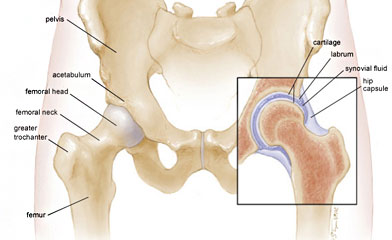
illustration of hip anatomy

On the upper side of the pelvis (hip) bone is the acetabulum, or socket, of the ball-in-socket joint. The surface of the acetabulum is the only part of the pelvis replaced in either hip replacement or resurfacing.

The femur, or thigh bone, is the longest bone in the body. The femoral head is the ball in the ball-in-socket joint, and fits into the acetabulum. It sits on top of the femoral neck. In hip replacement surgery, the femoral neck is cut and the head is completely removed. At the base of the neck is the greater trochanter, which marks the widest point of the hip area in the skeleton.

Cartilage is a tough, elastic, gel-like layer that lines the hip joint. It is the natural bearing surface in all joints. Cartilage absorbs the shock of impact and walking, and reduces the friction in the joint to allow smooth, pain-free movement. Once injured, cartilage in adults does not heal. With enough injury, progressive deterioration can result in a worn out (arthritic) joint. It can sometimes tear, leading to joint instability and pain.

The labrum is a ring of fibrocartilage that circles the rim of the acetabulum, deepening the socket. It adds strength to the joint, but limits the range of motion.

Synovial fluid is a transparent fluid that lubricates the hip joint, much like grease in mechanical, non-living joints.

The hip capsule is made up of multiple ligaments that completely enclose the hip joint, adding to its stability.

Filed Under: HIP, hip surgery Tagged With: hip anatomy

  • « Go to Previous Page
  • Page 1
  • Interim pages omitted …
  • Page 8
  • Page 9
  • Page 10
  • Page 11
  • Page 12
  • Page 13
  • Go to Next Page »

Primary Sidebar

ORTHO NEWS

Spinal anesthesia tied to increased opioid use after hip surgery

Spinal anesthesia tied to increased opioid use after hip surgery

Useful Health Tips for People With Chronic Hip Issues

Useful Health Tips for People With Chronic Hip Issues

A robotic assistant for joint replacement surgery

A robotic assistant for joint replacement surgery

Prior Diagnosis of COVID Has No Increased Complications in Total Joint Arthroplasty

Prior Diagnosis of COVID Has No Increased Complications in Total Joint Arthroplasty

Exactech Total Knee Failure Resulted in Revision Surgery, Lawsuit Alleges

Exactech Total Knee Failure Resulted in Revision Surgery, Lawsuit Alleges

AAOS Updates Clinical Practice Guideline for Surgical Management of Osteoarthritis of the Knee

AAOS Updates Clinical Practice Guideline for Surgical Management of Osteoarthritis of the Knee

Robotics Procedure Helping People Recover From Joint Replacement Surgery

Robotics Procedure Helping People Recover From Joint Replacement Surgery

Metformin Treatment in T2D Patients May Reduce Risk for Joint Replacement: Population-based Study

Metformin Treatment in T2D Patients May Reduce Risk for Joint Replacement: Population-based Study

Surgery for Juvenile Idiopathic Arthritis

Surgery for Juvenile Idiopathic Arthritis

Joint replacement: Myths and facts related to knee replacement surgery | Health

Joint replacement: Myths and facts related to knee replacement surgery

Copyright 2014 All Rights Reserved · DISCLAIMER: Nothing here constitutes legal, medical, or other advice; all content relates to an individual perspective only. A professional relationship with a physician, or with a lawyer is built over time, with mutual investment, trust, and respect. This site is not a substitute for that.
~ THIS DOMAIN IS FOR SALE ~

Privacy Policy